
 English
 Dutch
 French
Batch processing in pharmaceutical manufacturing
Explore batch processing in pharmaceutical manufacturing, from API synthesis and catalytic reactions to crystallization, purification and process control.
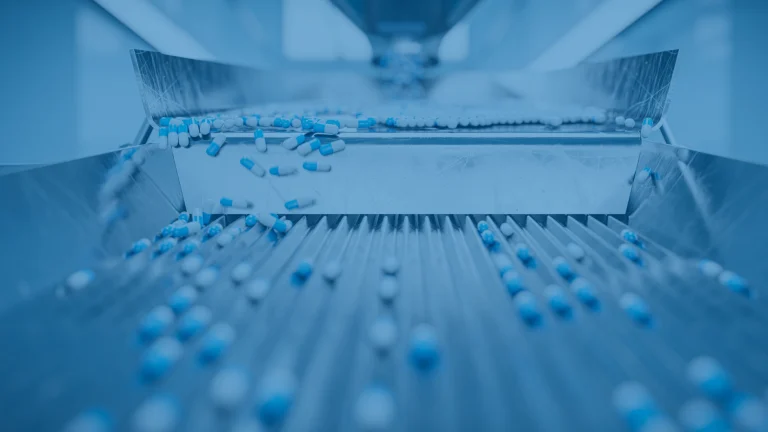
The foundation of pharmaceutical manufacturing
Batch processing remains a fundamental approach in pharmaceutical manufacturing, particularly for complex small-molecule active pharmaceutical ingredients (APIs), where precise process control, intermediate testing and regulatory traceability are essential.
From multi-step organic synthesis and catalytic transformations to crystallization, purification and API isolation, batch systems provide the flexibility to optimize individual unit operations while maintaining consistent product quality.
What is batch processing in pharmaceutical manufacturing?
Batch processing is a manufacturing approach in which a defined quantity of material is processed through a sequence of controlled operations. Each batch follows established processing instructions, with parameters such as temperature, pressure, reaction time, mixing and material additions monitored and documented.
In pharmaceutical manufacturing, batch processing is widely used for the synthesis, isolation and purification of small-molecule APIs. It allows manufacturers to evaluate intermediate quality, adjust process conditions within established limits and maintain traceability throughout the production process.
Unlike continuous manufacturing, where materials move through a process continuously, batch manufacturing typically involves discrete processing stages. This makes it particularly suitable for complex synthetic routes, multipurpose manufacturing facilities and processes requiring intermediate isolation or testing.
However, batch and continuous processing are not mutually exclusive. The most appropriate approach depends on the chemistry, production scale, process economics and quality requirements.
Key applications of batch processing in API manufacturing
Multi-step organic synthesis
The synthesis of complex small-molecule APIs frequently involves multiple chemical transformations, each producing an intermediate for the subsequent reaction.
Batch processing supports this approach by providing defined processing stages where intermediates can be tested, purified and assessed before proceeding to the next transformation.
Common intermediate purification techniques include:
Crystallization and precipitation
Column chromatography
Liquid-liquid extraction
Filtration and solvent exchange
These operations help remove reaction by-products, residual reagents and other impurities before subsequent synthetic steps.
Telescoping reactions can also be implemented in batch systems. Telescoping involves carrying an intermediate directly into the next reaction without isolation, potentially reducing processing time, solvent consumption and material handling.
The decision to telescope depends on factors such as intermediate stability, impurity carryover and compatibility between consecutive reaction conditions.
Batch processing therefore offers flexibility to combine intermediate isolation with telescoped operations when appropriate for the synthetic route.
Catalytic reactions: hydrogenation and coupling
Catalytic transformations are important in pharmaceutical API synthesis, enabling selective chemical reactions under controlled conditions.
Both heterogeneous and homogeneous catalytic reactions can be performed in batch reactors, depending on the reaction chemistry, catalyst system and production requirements.
Batch reactors provide control over reaction temperature, pressure, catalyst loading, mixing and reaction time.
Catalytic hydrogenation
Catalytic hydrogenation is used in pharmaceutical synthesis for transformations such as:
Reduction of carbon-carbon double bonds
Reduction of imines
Conversion of nitro groups into amines
Removal of certain protecting groups, including Cbz groups
These reactions commonly use hydrogen gas with catalysts such as palladium, platinum or Raney nickel.
In batch hydrogenation, dedicated pressure reactors allow the reaction to proceed under controlled hydrogen pressure and temperature. The appropriate operating conditions depend on the substrate, catalyst, solvent and reaction kinetics.
Hydrogen uptake, pressure changes and analytical sampling can provide information about reaction progress. Techniques such as gas chromatography (GC), high-performance liquid chromatography (HPLC) or suitable in-line spectroscopy may be used to monitor conversion and identify reaction by-products.
For hydrogenation processes, efficient gas-liquid mass transfer, catalyst handling and appropriate pressure-system safety measures are important considerations.
Catalytic coupling reactions
Catalytic coupling reactions, including palladium-catalyzed cross-coupling, are widely used to construct carbon-carbon and carbon-heteroatom bonds during API synthesis.
Batch processing allows controlled addition of reagents and catalysts, management of reaction temperature and monitoring of conversion.
Depending on the process, subsequent workup may involve catalyst removal, extraction, filtration or crystallization to achieve the required intermediate purity.
Chiral synthesis and resolution
The production of enantiomerically enriched or enantiopure APIs is an important aspect of pharmaceutical development because different enantiomers can exhibit different pharmacological and biological properties.
Batch processing is used for both asymmetric synthesis and chiral resolution, providing control over reaction conditions that influence stereoselectivity and enantiomeric purity.
Common approaches include:
Asymmetric catalysis: using chiral metal complexes or organocatalysts to favor formation of a particular enantiomer.
Chiral auxiliary approaches: using auxiliaries such as Evans oxazolidinones or Ellman sulfinyl imines to control stereochemical outcomes.
Enzymatic resolution: using enzymes to selectively transform one enantiomer.
Diastereomeric salt resolution: separating enantiomers through selective crystallization of diastereomeric salts.
Chiral crystallization and analytical control
Chiral resolution through diastereomeric salt formation often involves batch crystallization. Parameters such as solvent composition, seeding, cooling profile and crystallization time can influence separation efficiency and the resulting enantiomeric purity.
Analytical techniques such as chiral HPLC and chiral supercritical fluid chromatography (SFC) can be used to evaluate the enantiomeric composition of intermediates and final products.
Defined sampling points allow researchers to assess whether the process meets established purity requirements before proceeding to filtration or further purification.
Batch records also provide traceability between production conditions and analytical results, supporting process understanding, reproducibility and pharmaceutical quality documentation.
Crystallization and solid form development
Crystallization is a critical operation in pharmaceutical API manufacturing because it influences both chemical purity and the physical properties of the isolated solid.
The crystallization process can affect:
Particle size and particle size distribution
Crystal morphology and habit
Polymorphic form
Bulk density and powder flowability
Filtration and drying behavior
Dissolution performance
These properties can influence downstream processing, formulation development and, in some cases, drug product performance. Batch crystallization provides flexibility to control the conditions under which crystals nucleate and grow.
API crystallization
API crystallization can be performed in jacketed vessels using controlled cooling, evaporation, antisolvent addition or combinations of these approaches. The appropriate crystallization strategy depends on API solubility, solvent selection, solid-form behavior and the required product specifications.
Important process parameters include:
Temperature profile, cooling rate and final temperature
Agitation and mixing conditions
Solvent composition and concentration
Supersaturation
Seed loading and seed quality
Antisolvent addition rate, where applicable
These parameters are evaluated during process development to establish conditions that support reproducible crystal formation. Reliable temperature control is particularly important for cooling crystallization, where the temperature profile influences supersaturation and crystal growth.
Workup and purification of pharmaceutical APIs
Between synthetic steps and before final API isolation, pharmaceutical batch processes commonly include workup and purification operations. Their purpose is to remove residual reagents, catalysts, reaction by-products and other impurities while maximizing recovery of the desired compound. The purification strategy depends on the chemical properties of the API or intermediate and the applicable quality requirements.
Liquid-liquid extraction
Liquid-liquid extraction (LLE) is widely used in pharmaceutical synthesis to separate compounds based on their distribution between two immiscible liquid phases. These typically consist of an organic solvent and an aqueous phase with a defined pH and composition.
In batch processing, liquid-liquid extraction follows a controlled sequence of solvent addition, mixing, settling and phase separation.
Important process parameters include:
Solvent selection and solvent-to-feed ratio
Aqueous phase pH
Mixing intensity and duration
Number of extraction cycles
Settling time
Temperature
For ionizable compounds, controlling aqueous pH can significantly influence the distribution of the desired product and impurities between the two phases.
Partition coefficients and pH-dependent distribution ratios established during process development help determine suitable extraction conditions.
Phase separation
Efficient phase separation is essential for reliable liquid-liquid extraction and downstream purification. In pharmaceutical batch manufacturing, phase separation may occur in the reaction vessel or in a dedicated separation system. Common challenges include emulsion formation, accumulation of interfacial material, similar phase densities and slow settling.
These issues can be addressed through appropriate solvent selection, mixing strategies, settling time and temperature control. Phase identity may be verified using suitable analytical or physical measurements before material transfer. For processes containing catalyst fines, suspended solids or other contaminants, an additional filtration or clarification step may be required.
Impurity removal steps
Pharmaceutical API purification may involve additional treatments designed to remove specific impurities from the reaction mixture.
Examples include:
Activated carbon treatment for selected organic or colored impurities
Silica or adsorbent-based purification
Aqueous washing to remove residual reagents
Scavenging resins for residual transition metals
Filtration to remove catalysts and suspended solids
The choice of purification method depends on the impurity profile, process chemistry and required product quality.
Elemental impurity control
Residual metal catalysts, including palladium, platinum and nickel, may require specific control strategies during pharmaceutical manufacturing. ICH Q3D provides a risk-based framework for evaluating and controlling elemental impurities in drug products.
Appropriate sample preparation followed by analytical techniques such as ICP-MS or ICP-OES can be used to determine elemental impurity concentrations. Where required, batch purification may incorporate metal scavenging using functionalized silica, polymeric scavengers or other suitable materials.
Analytical results help establish whether the selected purification process achieves the relevant impurity-control objectives.
Discuss your application with our Xperts
Our Xperts are happy to discuss your application and help you find the right solution.
FAQ
Why is batch processing used for API synthesis?
Batch processing is the preferred approach for API synthesis because it provides controlled hold points between reaction steps. These hold points allow chemists to test, purify, and verify intermediates before advancing to the next stage, helping ensure product quality and regulatory compliance.
Why are multi-step API syntheses typically performed in batch reactors?
Many active pharmaceutical ingredients require four to twelve separate chemical transformations. Batch reactors allow each intermediate to be isolated, analyzed, purified, and documented before continuing the synthesis, improving process control and traceability.
What are the advantages of batch processing in multi-step organic synthesis?
Batch processing allows intermediate testing, impurity monitoring, crystallization, extraction, chromatography, and quality assessment after each reaction step. This helps reduce the risk of carrying defects through the entire synthesis route.
What is telescoping in pharmaceutical chemistry?
Telescoping is the practice of transferring a reaction intermediate directly into the next synthetic step without isolating it. In pharmaceutical batch manufacturing, telescoping decisions are typically controlled and documented within the batch record.
Why are catalytic hydrogenation reactions commonly performed in batch reactors?
Batch reactors provide precise control over hydrogen pressure, catalyst loading, temperature, and reaction time. This allows safe execution of hydrogenation processes while enabling monitoring of reaction progress and completion.
What is catalytic hydrogenation in pharmaceutical manufacturing?
Catalytic hydrogenation is a chemical reaction that uses hydrogen gas and a catalyst to reduce functional groups such as double bonds, nitro groups, imines, or protecting groups during API synthesis.
Why is batch processing important for catalytic reactions?
Batch systems allow chemists to monitor reaction conditions closely, adjust operating parameters when necessary, and confirm reaction completion before proceeding to downstream processing.
What is chiral synthesis?
Chiral synthesis is the production of molecules with a specific three-dimensional arrangement. This is important because different enantiomers can exhibit different biological activities and safety profiles.
Why is enantiomeric purity important in pharmaceuticals?
Enantiomeric purity ensures that the desired therapeutic form of a drug is produced while minimizing unwanted biological effects associated with the opposite enantiomer.
What is chiral resolution?
Chiral resolution is a process used to separate enantiomers, often through diastereomeric salt formation and crystallization. It remains widely used in commercial pharmaceutical manufacturing.
Why is crystallization considered a critical pharmaceutical process?
Crystallization determines crystal form, particle size, purity, flowability, bulk density, dissolution rate, and bioavailability. These properties directly affect drug manufacturing and product performance.
Why does pharmaceutical crystallization typically use batch processing?
Crystallization requires dynamic control of temperature, concentration, agitation, seeding, and solvent composition. Batch processing allows these variables to be monitored and adjusted throughout the crystallization cycle.
What is a polymorph in pharmaceutical manufacturing?
A polymorph is a different crystalline form of the same chemical compound. Different polymorphs can have different stability, solubility, dissolution rates, and bioavailability.
What causes emulsion formation during phase separation?
Emulsions can occur because of surfactants, fine particles, catalyst residues, or partially miscible solvents. These conditions can slow separation and reduce process efficiency.